Concrete Polishing
Bring out the natural beauty of your concrete with a polished finish that is durable, clean, and easy to maintain.
At Redline Flooring LLC, we provide professional concrete polishing for residential, commercial, and industrial spaces. Polished concrete is a great option for customers who want a finished floor without covering the slab with a traditional coating.
What Is Concrete Polishing?
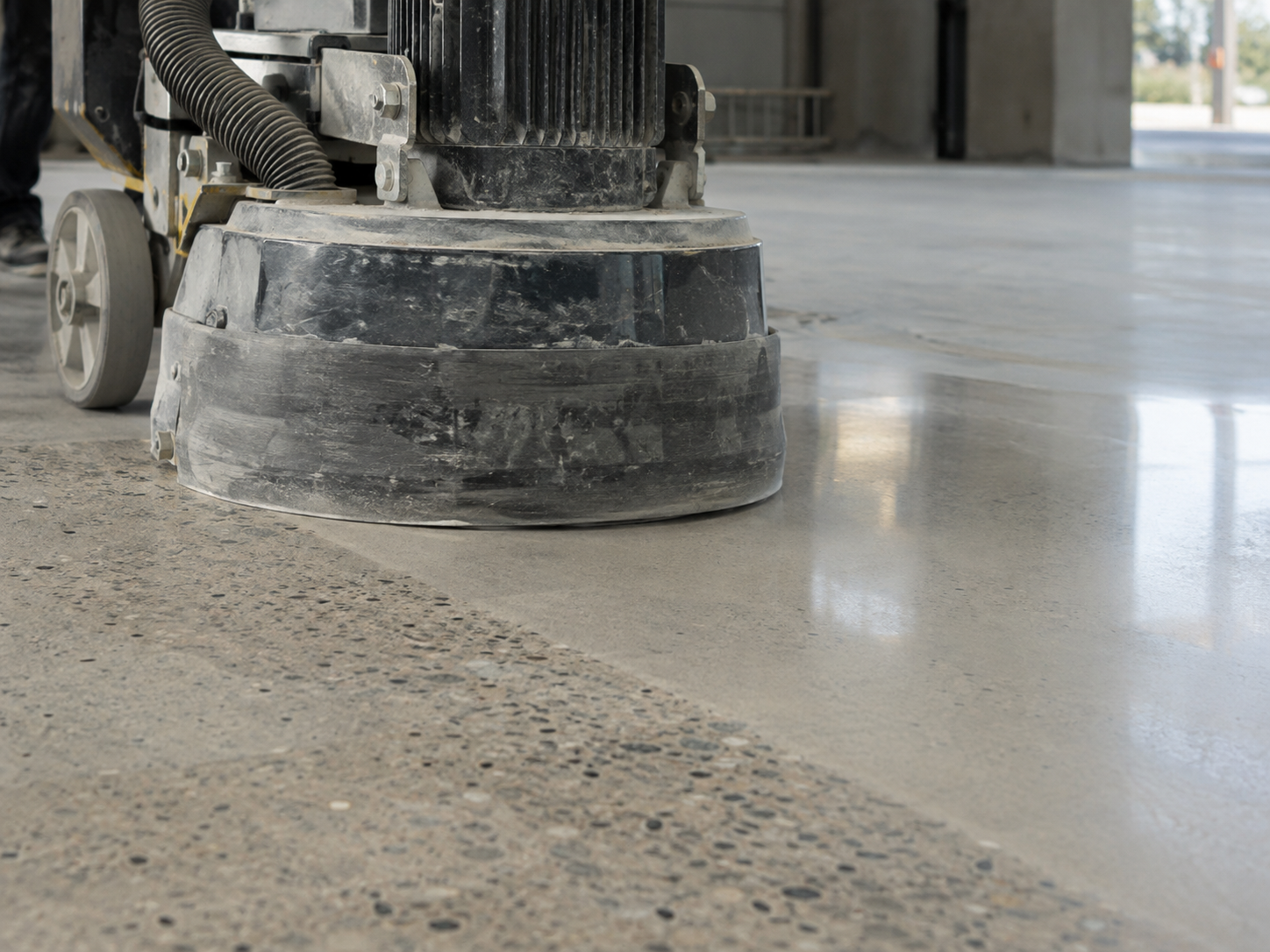
Concrete polishing is a mechanical process that uses progressively finer diamond tooling to grind, refine, and polish the surface of the concrete.
Instead of applying a decorative coating over the floor, the concrete itself becomes the finished surface.
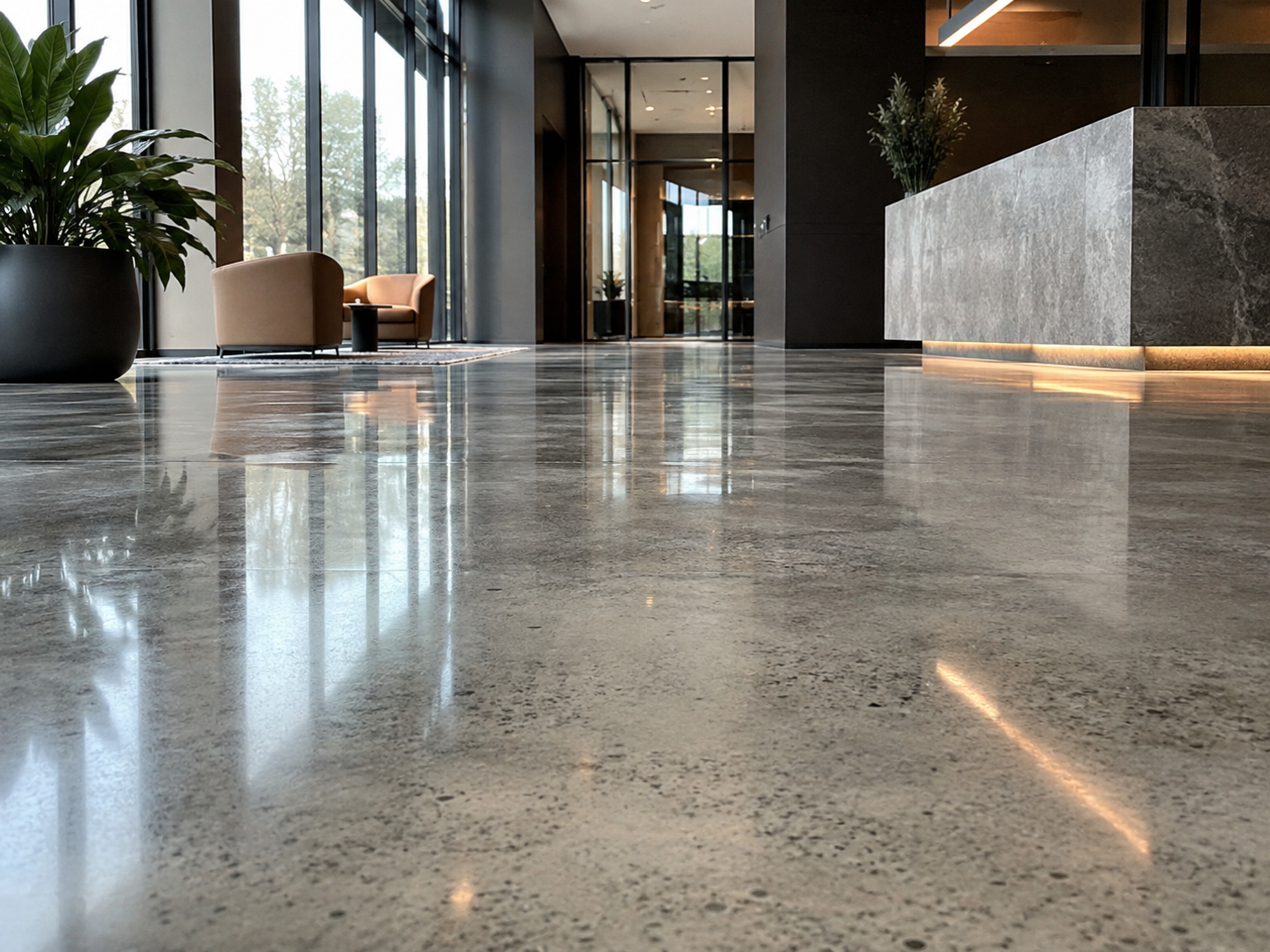
The final appearance can range from a more natural satin finish to a higher-gloss polished look depending on the desired result.
Our Concrete Polishing Process
Every concrete floor is different, so the polishing process is adjusted based on the condition of the slab and the finish you want.
Initial Grinding
The floor is mechanically ground using diamond tooling to remove surface imperfections and begin refining the concrete.
Concrete Repairs
Cracks, holes, joints, and surface damage are repaired as needed before the polishing process continues.
Aggregate Exposure
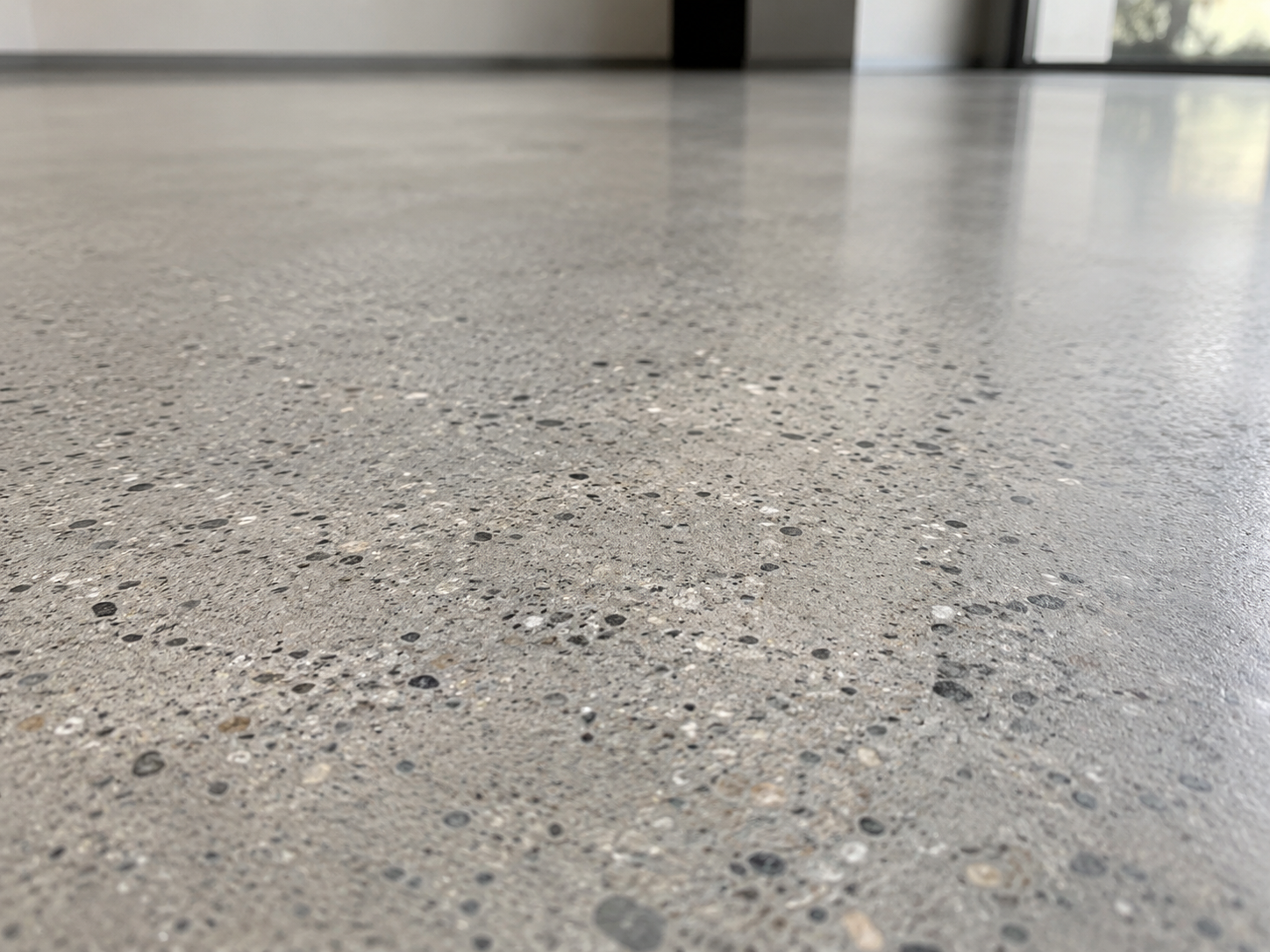
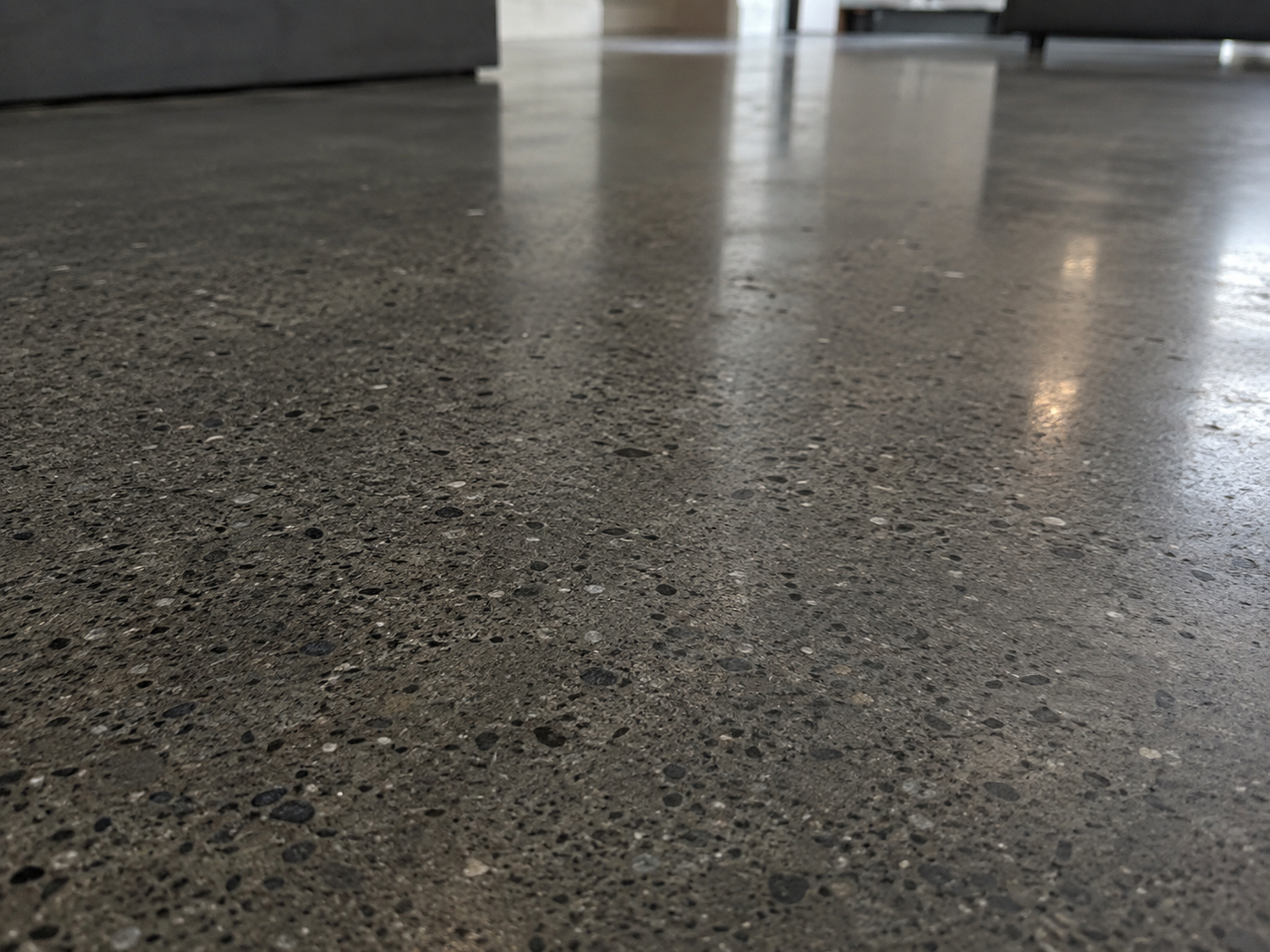
The amount of stone and aggregate visible in the finished floor can be adjusted by how deeply the concrete is ground.
Concrete Densifier
A densifier is applied during the polishing process to help strengthen and harden the concrete surface.
Progressive Polishing
The floor is polished using progressively finer diamond tooling to create the desired level of smoothness and sheen.
Protective Treatment
A stain guard or protective treatment may be applied to help protect the finished concrete from spills and everyday use.
Choose Your Level of Aggregate Exposure
One of the biggest advantages of polished concrete is the ability to create different looks depending on how much aggregate is exposed.
Options may include:
Minimal aggregate exposure
Fine aggregate exposure
Medium aggregate exposure
Heavy aggregate exposure
Because the appearance depends on the original concrete slab, every polished floor will have its own unique pattern and character.
Choose Your Level of Sheen
Polished concrete does not have to be extremely glossy.
The finished floor can be polished to different levels depending on the appearance you want.
Available looks may include:
Matte
Satin
Semi-gloss
High-gloss
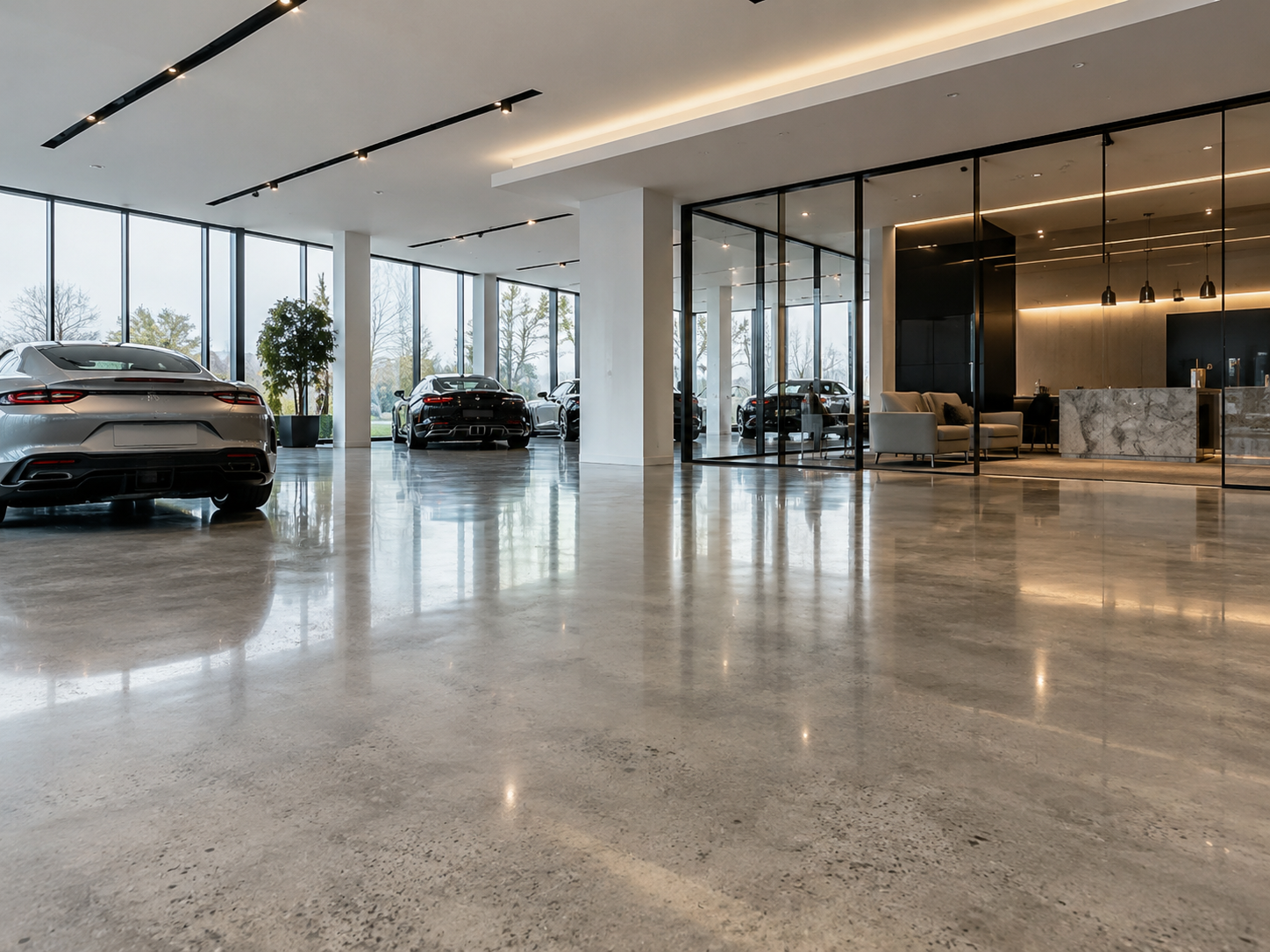
This makes polished concrete suitable for everything from industrial spaces to high-end commercial interiors.
Benefits of Polished Concrete
Polished concrete offers a durable finished surface while maintaining the natural appearance of the concrete.
Benefits include:
Durable and long lasting
Low maintenance
Easy to clean
No decorative coating to peel or flake
Customizable aggregate exposure
Multiple levels of sheen
Clean, professional appearance
Works well in high-traffic areas
Uses the existing concrete slab as the finished floor
Suitable for residential, commercial, and industrial spaces
Where Can Polished Concrete Be Used?
Polished concrete works well in a wide variety of spaces, including:
Retail stores
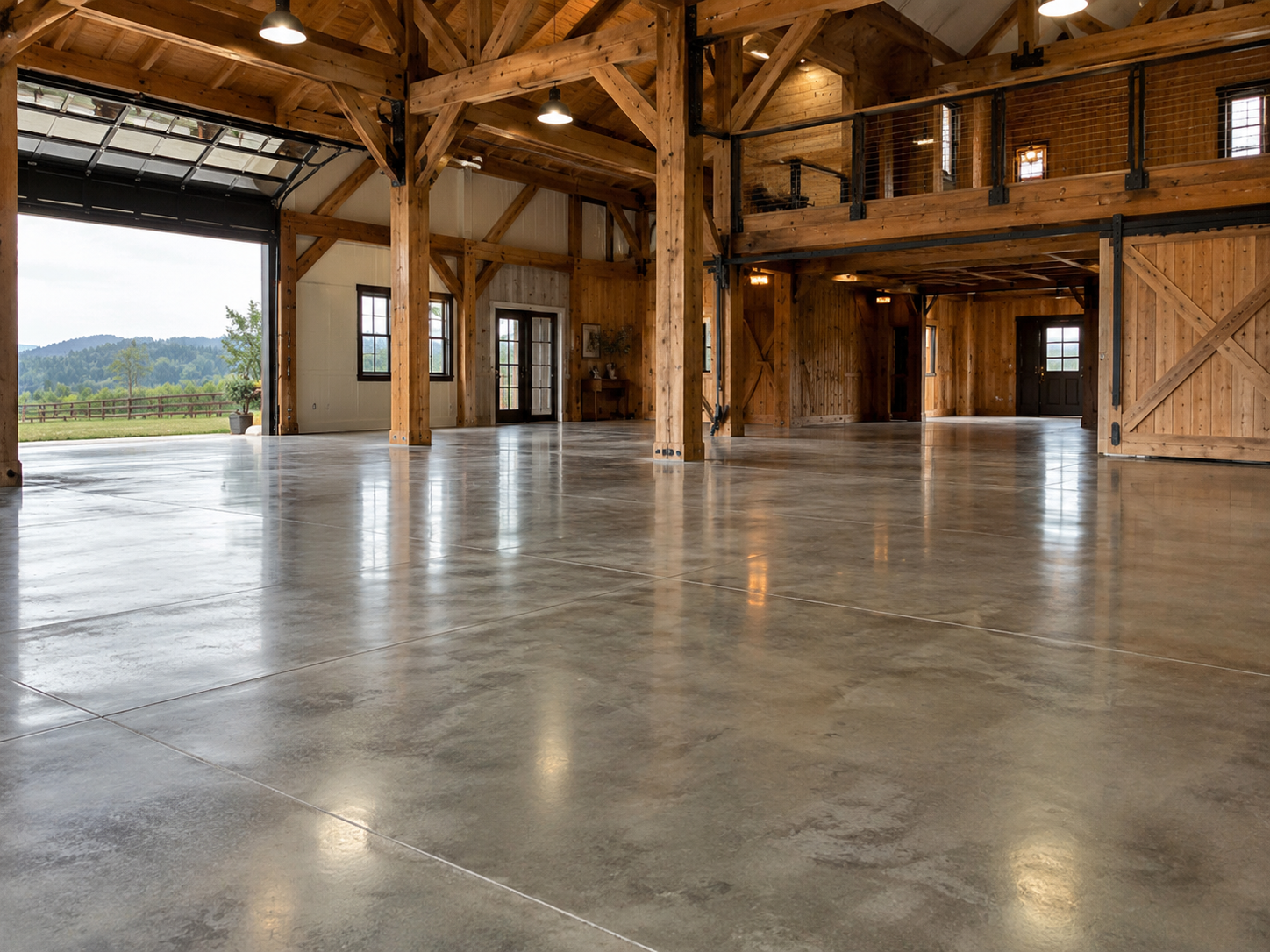
Warehouses
Showrooms
Offices
Restaurants
Commercial buildings
Manufacturing facilities
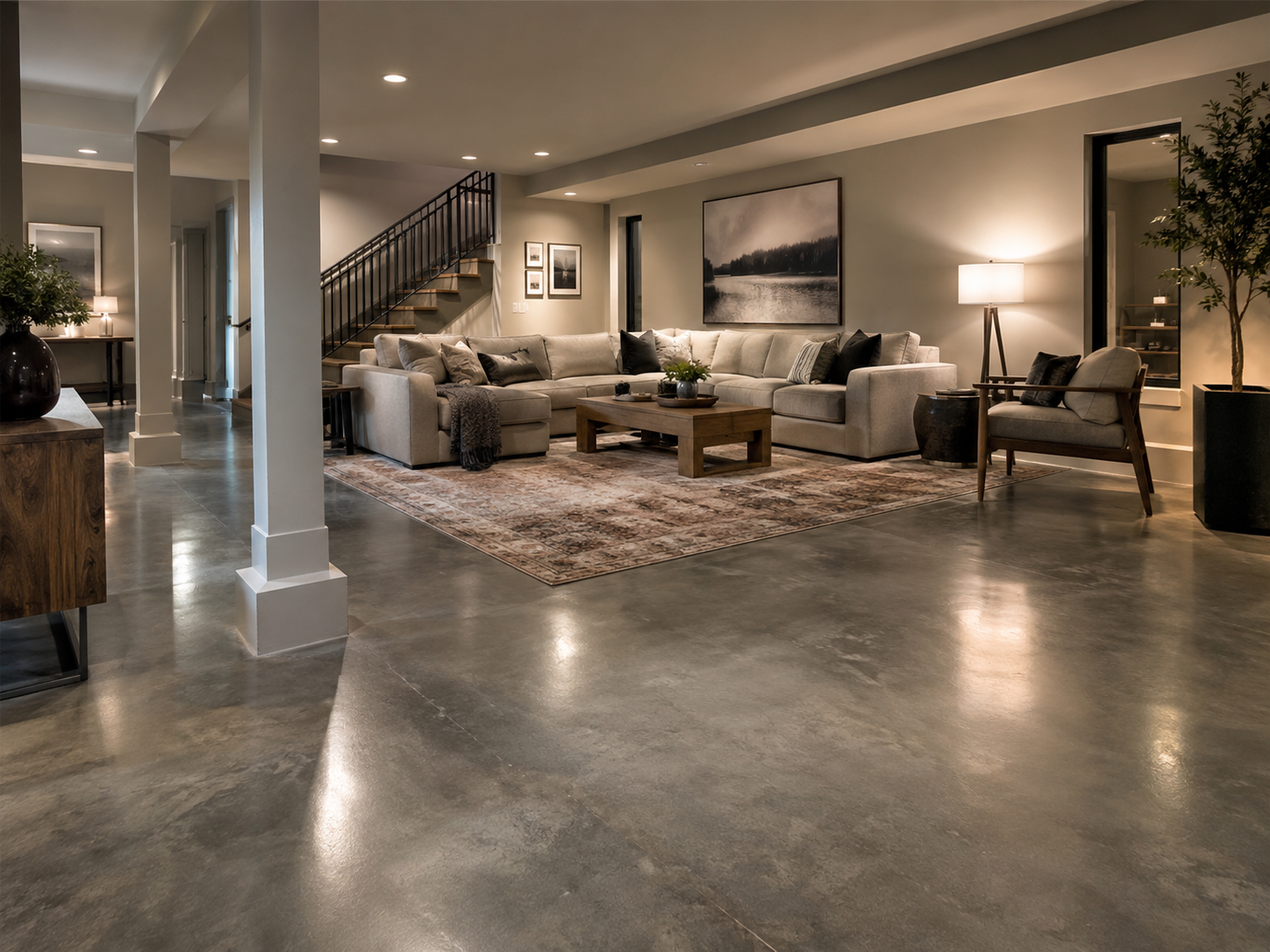
Basements
Residential interiors
Workshops
Large open spaces
Every Polished Floor Is Unique
Polished concrete is different from a coating system because the final appearance depends heavily on the existing concrete.
Aggregate placement, color variations, previous repairs, cracks, and other characteristics of the slab may remain visible after polishing.
These natural variations are what give polished concrete its unique appearance and character.
Low-Maintenance Flooring
Polished concrete is a great choice for customers looking for a floor that is simple to maintain.
Routine sweeping, dust mopping, and appropriate cleaning can help keep the surface looking clean and professional.
Because the concrete itself is the finished surface, there is no decorative epoxy layer that can peel away from the slab.
Frequently Asked Questions
Can any concrete floor be polished?
Many concrete floors can be polished, but the condition of the slab must be evaluated first. Existing coatings, adhesives, damage, or poor concrete conditions may require additional preparation.
Will my floor look exactly like a picture?
Not necessarily. Every concrete slab is different, so the aggregate, color, repairs, and final appearance will vary from floor to floor.
Can you control how much stone is visible?
Yes, to an extent. Grinding deeper into the surface can expose more aggregate, but the exact pattern depends on how the original concrete was poured and finished.
Is polished concrete slippery?
The slip resistance of polished concrete depends on the finish, environment, maintenance, and whether the floor is wet or dry.
Can old concrete be polished?
Yes, many older concrete floors can be polished. The floor may require coating removal, adhesive removal, repairs, or additional grinding before polishing.
Is polished concrete easy to maintain?
Yes. Polished concrete is generally easy to sweep, dust mop, and clean with appropriate maintenance products.
How much does concrete polishing cost?
Pricing depends on square footage, concrete condition, existing coatings or adhesives, repairs, desired aggregate exposure, and the level of polish selected.
Bring Out the Natural Look of Your Concrete
Concrete polishing creates a durable, professional finish while highlighting the natural character of your existing slab.
Contact Redline Flooring LLC today for a free estimate on your concrete polishing project.